Friday, October 28, 2011

Wallpapers containing color

The simplest removal option is to brush the paper with water. Water soaks through the paper and saturates the glue, allowing the paper to be peeled off.
In 1748 the English ambassador to Paris decorated his salon with blue flock wallpaper, which then became very fashionable there. In the 1760s the French manufacturer Jean-Baptiste Réveillon hired designers working in silk and tapestry to produce some of the most subtle and luxurious wallpaper ever made. His sky blue wallpaper with fleurs-de-lys was used in 1783 on the first balloons by the Montgolfier brothers. The landscape painter Jean-Baptiste Pillement discovered in 1763 a method to use fast colours. Towards the end of the century the fashion for scenic wallpaper revived in both England and France, leading to some enormous panoramas, like the 1804 20 strip wide Panorama, designed by the artist Jean-Gabriel Charvet for the French Manufacture Joseph Dufour et Cie showing the Voyages of Captain Cook. One of this famous so called "papier peint" wallpaper is still in situ in Ham House, Peabody Massachusetts. Beside Joseph Dufour et Cie other French manufacturers of panoramic scenic and trompe l'œil wallpapers, Zuber et Cie and Arthur et Robert exported their product across Europe and North America. Zuber et Cie's c. 1834 design Views of North America is installed in the Diplomatic Reception Room of the White House. Like most of eighteenth century wallpapers, this was designed to be hung above a dado.
Solid vinyl with a cloth backing is the most common commercial wallcovering and comes from the factory as untrimmed at 54 inches approximately, to be overlapped and double cut by the installer. This same type can be pre-trimmed at the factory to 27 inches approximately.
Another method of removal is to apply steam to wallpaper in order to dissolve the wallpaper paste. A wallpaper steamer consists of a reservoir of water, an electric heating element, and a hose to direct the steam at the wallpaper. The steam dissolves the wallpaper paste, allowing the wallpaper to be peeled off. However, care must be taken to prevent damage to the drywall underneath. Sometimes steaming can lead to the crumbling of underlying drywall or plaster, leaving an uneven surface to be repaired.
Hand-blocking wallpapers like these are manufactured by using a centuries old method in which wallpaper is hand-printed from hand-carved blocks on paper. Hand-blocked wallpaper depicted scenes include, panoramic views of antique architecture, exotic landscapes and pastoral subjects, as well as repeating patterns of stylized flowers, people and animals. The 1797 founded French company Zuber et Cie in Rixheim, France is the only company in the world which still manufactures woodblocked wallpaper.

Wallpapers containing color

Widescreen Wallpapers Top
Rtx Wallpaper Wide Wallpaper
3d wide wallpapers 2650x1600
Wide wallpapers and HD
orange widescreen wallpapers
Wide Wallpaper Wallpaper
Animal Wallpapers 2
Animal Wallpapers 2
One more widescreen wallpaper
Wide Wallpaper Wallpaper
HD wide wallpapers all free in
Widescreen Wallpapers Top
Wide Wallpapers Babes
Wide wallpapers Nature
And Spaces Wide Wallpapers
Spring green wallpapers and
Amazing Widescreen Wallpapers
WideScreen Wallpaper
Free Widescreen wallpapers
shining widescreen wallpapers

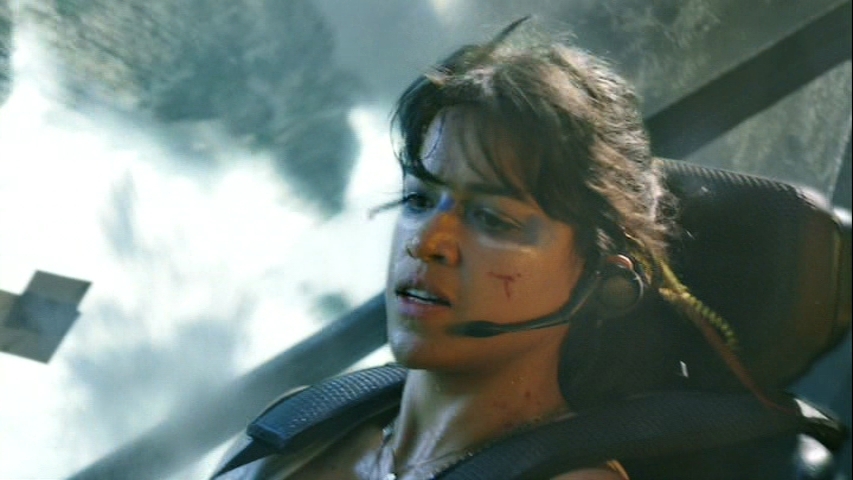
Avatar Michelle Rodriguez

Rodriguez is currently working on two screenplays. One is a family film based on a concept which she describes as "a 2012 story about purity and animals and children" and the other is a revision of an American remake of the 1997 German film Bandits which she describes as a film "about four girls who break out of jail and get chased across the country by the feds and by this MTV-like representative".
Michelle Rodriguez was born in San Antonio, Texas, the daughter of Carmen Milady (née Pared), a native of the Dominican Republic, and Rafael Rodriguez, a Puerto Rican who served in the United States Army. She has a total of ten siblings and half-siblings. She was partly raised by her devoutly religious maternal grandmother and was brought up as one of Jehovah's Witnesses (her mother's religion), though she has since abandoned that faith. Rodriguez moved to the Dominican Republic with her mother when she was eight and lived in Puerto Rico until the age of eleven, later settling in Jersey City, New Jersey. She dropped out of high school, but later earned her GED; in total she was expelled from five schools. Rodriguez briefly attended business school before quitting to pursue a career in acting, with the ultimate goal of becoming a writer and director.
Following her debut in Girlfight, Rodriguez has consistently portrayed tough girl, tomboyish characters that operate in traditional male fields such as the police force or armed forces. Rodriguez says that she does not mind the typecasting, and in fact, is somewhat responsible for it:
In June 2007, the lesbian magazine Curve ran a cover story that claimed Rodriguez to be bisexual. Rodriguez criticized the magazine for this, asserting that the magazine "put words in (her) mouth". She again stated that she was not a lesbian in a November 2008 interview in the Dominican women's magazine Cayena.
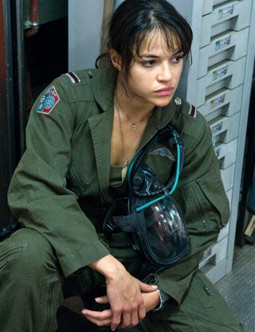
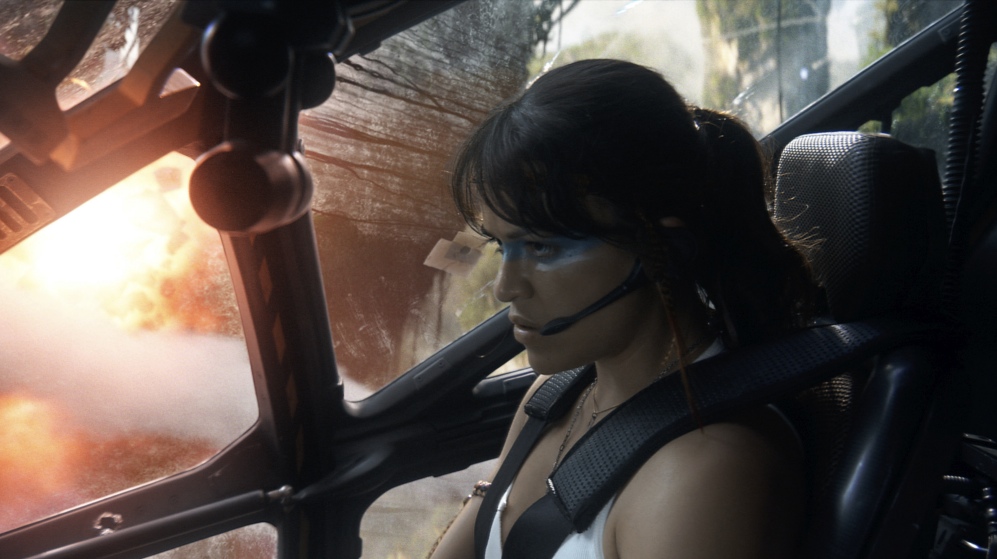
Mayte Michelle Rodríguez (born July 12, 1978), known professionally as Michelle Rodriguez, is an American actress. Following on from her breakthrough role in 2000's Girlfight, she is best known for playing tough-girl roles and starring in Hollywood blockbusters such as The Fast and the Furious, Resident Evil, S.W.A.T., Avatar, Machete and Battle: Los Angeles, as well as for her role as Ana Lucia Cortez in the television series Lost (2005–2006, 2009–2010).

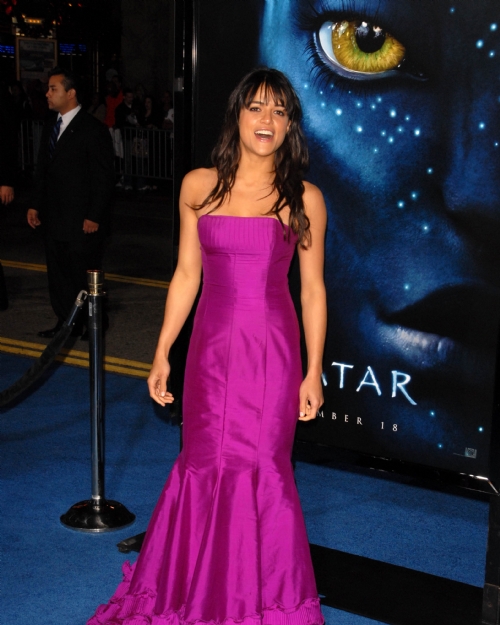
Avatar Michelle Rodriguez
avatar michelle rodriguez
Michelle Rodriguez Picture
Avatar Michelle Rodriguez
Michelle Rodriguez Avatar
Michelle can be described in a
Avatar Michelle Rodriguez
Michelle Rodriguez Avatar
Michelle Rodriguez Avatar 2
Michelle Rodriguez Avatar
Michelle Rodriguez 290x400
Michelle Rodriguez in Avatar
Michelle Rodriguez
Michelle Rodriguez
Michelle Rodriguez s Avatar by
Michelle Rodriguez in Fast

Thursday, October 27, 2011

the King s Chester Design

By 2000, over 140 Photo CD processing labs in the USA were active, with many more outside the USA. However, by the late 1990s, Photo CD was being eclipsed by alternate formats, mainly based on the industry standard JPEG format. In the consumer segment, the Photo CD format’s relatively inefficient compression scheme meant that Photo CD files were significantly larger than a JPEG files of similar quality, and thus less convenient for transmission across the internet, etc. For example, a 16Base Photo CD image of 5.5 Mb can be encoded as a JPEG image of 2.1 Mb at 80% quality, visually indistinguishable from the original. When the Photo CD format was designed in the early 1990s, a design goal was to allow low cost playback-to-TV devices. At that time the available technology precluded 2-dimensional compression schemes such as JPEG, but by the late 1990, advances in microprocessor technology had moved JPEG/PNG compression to well within the range of even very low cost consumer electronics.
An oddity of this encoding scheme is that it allows Photo CD images to represent colors which are above 100%, "whiter than white". At the time of Photo CD's introduction, this allowed the display of images on the analog televisions of the day to show brighter, more vivid colors than would otherwise be the case. This was acceptable as the analog televisions of the day were designed to be driven beyond their 100% level without abruptly clipping. However, this aspect of Photo CD encoding is not compatible with modern image formats, and is the cause of the well documented "Blown Highlights" problem when converting Photo CD images to more modern formats. All modern formats enforce hard clipping at 100%, resulting in highlight clipping in converted images unless some form of Photo CD specific luminance and chrominance mapping is performed.
The preshaped RGB values are then converted to a luminance and two chrominance components via a CCIR 601-1 conformant transform matrix:
In the professional and advanced amateur segments, Photo CD had been eclipsed by low cost desktop scanners such as those from Nikon and Minolta in the mid range, and by drum scanners such as those from Imacon at the very high end. While the pixel resolution of Photo CD was still comparable or better than the alternatives, Photo CD suffered from a number of other disadvantages. Firstly, the Photo CD color space, designed for TV display, is smaller than what can be achieved by even a low cost desktop scanner. Secondly, the color rendition of Photo CD images changed over time and with different scanner versions; 4050 scanners had different color rendition to earlier versions.. Thirdly, the dynamic range of scans was lower than for desktop scanners. Test at the time indicated that the dmax rating (a measure of maximum density obtainable) of Photo CD was 2.8-3.0, while commonly available desktop scanners were reaching 4.2, a substantial difference. As a result of this, and Photo CD’s problems with color rendering, by 2004 the professional segment of the user community had generally turned against Photo CD.
Despite Kodak not releasing the specifications for the Photo CD format, it has been reverse engineered, so allowing images to be converted to more modern formats. The original reverse engineering work was performed by Hadmut Danisch of the University of Karlsruhe, who deciphered the format by studying hex dumps of Photo CD files, and subsequently wrote hpcdtoppm, which converts Photo CD Images to PPM format, in the early 1990s. During the early 1990s, hpcdtoppm was extensively distributed as part of various Linux distributions, but has since been almost entirely abandoned due to concerns about hpcdtoppm’s restrictive license conditions and lack of color management. However, Hadmut Danisch’s reverse engineering work has been used to create a number of other open source implementations of Photo CD decoders such as ImageMagick. In 2009, pcdtojpeg was created under the GPL open source licence. Also acknowledged by the author to be based on Hadmut Danisch’s reverse engineering work, pcdtojpeg allows Photo CD metadata to be decoded, is color managed, and can decode all known variants of Photo CD files. Currently hpcdtoppm and pcdtojpeg together form the core of information available in the public domain on the technical details of the Photo CD format.

the King s Chester Design
Designs are repetitive and are
you the design process of
Web Design
Web Design
live by design
live by design
5DFly Photo Design 3 62 6
Website designs are the face
designed by its founder
Design Web 2 0 by Tom Stardust
Web Design in Hampshire
download 5 nicely design
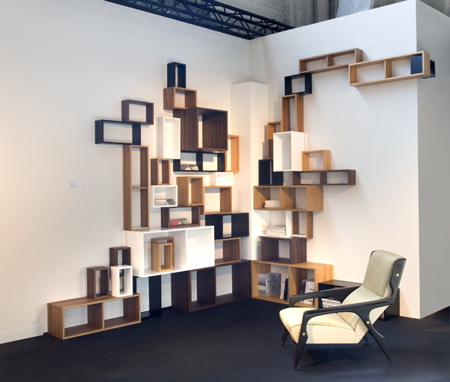
Dezeen � Design Miami Basel 07
Design is all about colors and
more nigerian website design
Get Web Design was established
For us Website Design
3D Graphic Design Using Type
Swiss Graphic Design Basic
Design is Random Colors